
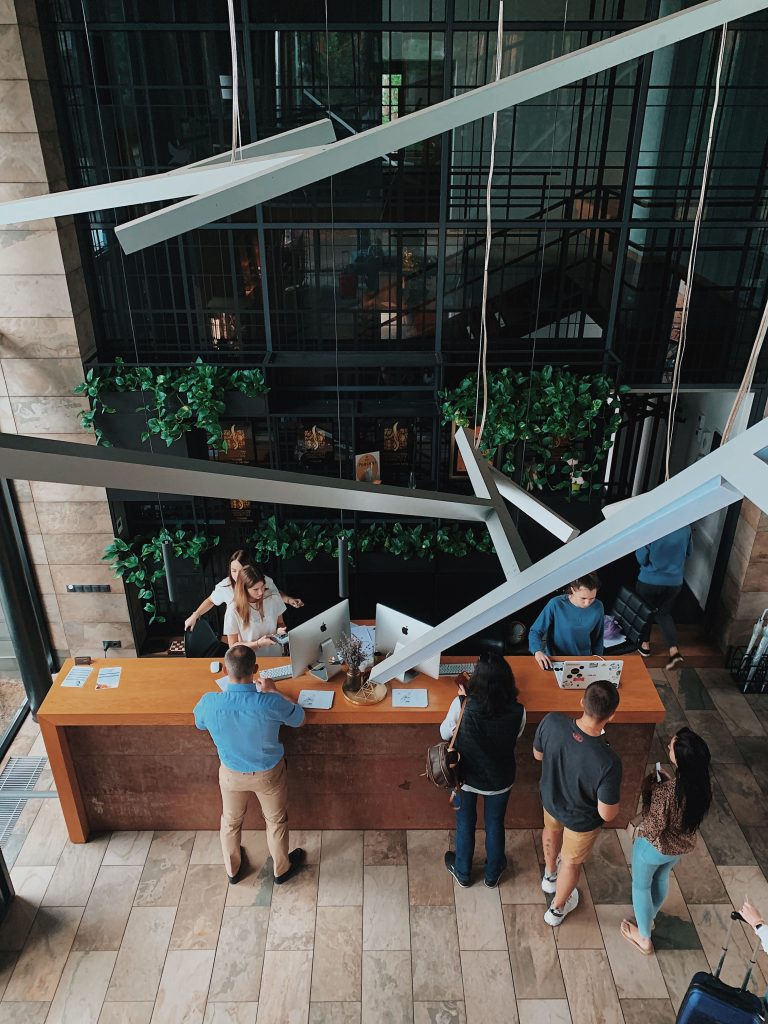
Hotels throughout the San Francisco Bay Area welcome thousands of guests, employees, vendors, contractors, and visitors every day. From business travelers and tourists to families, event attendees, and long-term guests, a hotel lobby is often the first point of contact between a property and the public. While creating a welcoming atmosphere is essential to the hospitality industry, hotel management must also recognize the importance of maintaining a safe and secure environment. One of the most effective ways to strengthen hotel security is to have a trained security officer stationed directly in the main lobby.
A visible security presence in the lobby provides much more than protection after an incident occurs. A professionally trained security officer can serve as a deterrent to criminal activity, monitor access to the property, assist guests and employees, identify suspicious behavior, respond to emergencies, and coordinate with hotel management and emergency services when necessary. In a busy and diverse region such as the San Francisco Bay Area, having a dedicated security officer at the front entrance can provide an additional layer of protection that technology and remote monitoring alone cannot offer.
A Visible Deterrent to Crime
One of the most immediate benefits of placing a security officer in a hotel’s main lobby is the visible deterrent they provide. Individuals who intend to commit theft, trespassing, vandalism, or other disruptive behavior are less likely to target a property when they know a trained security professional is actively monitoring the area.
A lobby security officer creates a noticeable distinction between a hotel that simply has cameras and one that has an individual physically present and prepared to intervene. Surveillance cameras can record activity, but they cannot speak with an individual, prevent unauthorized access, notify management of developing concerns, or immediately respond to a disturbance. A security officer can.
The presence of an officer also communicates to legitimate guests that their safety is a priority. Guests are more likely to feel comfortable entering and leaving the property when they see a professional security officer monitoring the lobby and surrounding entrances.
Controlling Access to the Hotel
Hotel lobbies are naturally high-traffic areas. Guests may enter through the main doors at all hours, while employees, delivery drivers, vendors, contractors, rideshare passengers, and visitors may also require access to the building. Without appropriate oversight, it can be difficult for hotel staff to determine who should be inside the property and why.
A lobby security officer can help monitor these individuals and identify activity that appears inconsistent with normal hotel operations. Officers can observe entrances, monitor individuals entering and exiting, address unauthorized access, and communicate with the front desk when questions arise.
This is particularly important during overnight hours, when hotels may have fewer employees working and a smaller number of guests moving through common areas. A dedicated security officer can provide an additional level of oversight during these quieter periods when unusual activity may otherwise go unnoticed.
Protecting Hotel Guests and Employees
Hotel employees frequently interact with members of the public, sometimes under challenging circumstances. Front-desk personnel, valet attendants, housekeeping employees, maintenance staff, and other hotel workers may encounter intoxicated individuals, disruptive guests, unauthorized visitors, or people experiencing a personal crisis.
A security officer stationed nearby gives employees a resource they can turn to when a situation becomes uncomfortable or potentially dangerous. Rather than requiring front-desk employees to personally confront a disruptive individual, hotel personnel can request assistance from security.
This separation of responsibilities is important. Hotel employees can focus on providing hospitality and customer service while trained security personnel handle safety-related concerns. The result is a more professional and controlled response to situations that could otherwise escalate.
Responding Quickly to Emergencies
Emergencies in a hotel can develop quickly. Medical emergencies, fights, disturbances, fires, suspicious packages, unauthorized individuals, and other incidents may require immediate attention.
A security officer positioned in the lobby is strategically located to respond quickly to many areas of the property. Because the officer is already on-site, there is no need to wait for an off-site security patrol to arrive before someone can assess the situation.
Security officers can initiate appropriate emergency procedures, contact police, fire, or medical personnel when necessary, assist with evacuations, direct emergency responders to the correct location, and provide hotel management with information about what occurred.
The officer’s familiarity with the property can also be extremely valuable during an emergency. Knowing the hotel’s entrances, exits, elevators, stairwells, parking areas, guest floors, and other critical locations can help emergency personnel navigate the property more efficiently.
Supporting Front Desk Operations
The front desk is often the operational center of a hotel lobby. Front-desk employees are responsible for checking guests in and out, answering questions, managing reservations, handling payments, and assisting guests with a variety of requests. These responsibilities can make it difficult for them to continuously monitor everything happening in the lobby.
A security officer can complement the front desk without replacing its responsibilities.
When security personnel are present, front-desk employees have someone they can immediately contact when they encounter suspicious behavior, aggressive individuals, unauthorized visitors, or other concerns. This can reduce the pressure placed on hospitality employees and allow them to maintain a professional customer-service experience.
Security officers can also assist with managing crowds, monitoring busy entrances, and maintaining order during periods of increased activity, such as conferences, weddings, sporting events, holidays, and large group arrivals.
Protecting Hotel Property
Hotels contain valuable property belonging to both the business and its guests. Lobby areas may contain computers, televisions, furniture, luggage, electronic equipment, payment systems, and other valuable items. Guests themselves may also be carrying laptops, cameras, phones, jewelry, and other personal belongings.
A security officer can help reduce opportunities for theft by maintaining a visible presence and monitoring activity in areas where people and property are concentrated.
Officers can also monitor unattended luggage, observe individuals who appear to be attempting to access restricted areas, and report suspicious behavior to hotel management. If an incident occurs, detailed observations and timely reporting can assist hotel management and law enforcement with their investigation.
Monitoring Suspicious and Unusual Behavior
Effective hotel security is not simply about responding to crimes. Prevention often begins with recognizing unusual behavior before it develops into a larger problem.
A trained security officer can observe behavioral indicators that may warrant additional attention. For example, an individual repeatedly entering and leaving the hotel without an apparent reason, attempting to access restricted areas, monitoring employees, or behaving aggressively may require closer observation.
Security personnel should approach these situations professionally and without unnecessary confrontation. Their role is to assess circumstances, communicate with hotel management, follow established post orders and procedures, and take appropriate action when necessary.
This proactive approach can help identify potential problems before they become significant incidents.
Improving Guest Confidence and the Hotel Experience
Security is also an important part of the overall guest experience. People want to know that the hotel they are staying in takes their safety seriously.
A visible security officer can provide reassurance to guests, particularly during evening and overnight hours. Guests arriving late from the airport, returning from dinner, attending an event, or entering the property after dark may feel more comfortable knowing that a trained professional is monitoring the lobby.
This can be particularly valuable for travelers who are unfamiliar with the area. The San Francisco Bay Area attracts visitors from across the country and around the world, many of whom may not be familiar with the surrounding neighborhood or local conditions.
A professional security presence helps create an environment where guests can focus on enjoying their stay rather than worrying about their personal safety.
Security During High-Traffic Events
Bay Area hotels frequently host conferences, weddings, corporate meetings, private events, and large gatherings. During these occasions, the number of people entering and exiting the property can increase dramatically.
A lobby security officer can help manage the additional traffic and maintain awareness of who is entering the property. Officers can assist with directing guests, monitoring entrances, identifying unauthorized individuals, and communicating with hotel management when unusual circumstances arise.
Large events can also increase the likelihood of disputes, intoxication-related incidents, lost property, and other disturbances. Having security already stationed at the property allows these issues to be addressed quickly and professionally.
The Value of Detailed Security Reporting
A professional security officer should not only be present; they should also document important activity occurring during their shift.
Detailed daily activity reports and incident reports provide hotel management with a record of security-related events. Reports can document suspicious activity, disturbances, medical emergencies, property damage, unauthorized individuals, safety concerns, and other incidents.
Modern security companies can further enhance this process through digital reporting platforms that allow officers to submit time-stamped reports, photographs, incident documentation, and patrol information. This provides hotel management with greater visibility into what is occurring on the property.
Over time, these reports can also help identify recurring problems. If incidents repeatedly occur at a particular entrance, during a particular time period, or in a specific area of the property, management can use that information to adjust security procedures and staffing.
Security and Hospitality Working Together
Hotel security should never be viewed as being separate from hospitality. Instead, effective security should support the guest experience.
The best hotel security officers understand that their job involves more than simply standing at an entrance. They are representatives of the property and should interact with guests in a professional, courteous, and respectful manner.
A security officer can provide directions, assist guests who need help, contact hotel personnel when necessary, and respond to safety concerns while maintaining a welcoming demeanor.
Professionalism is particularly important in a hotel environment because guests may form an impression of the entire property based on their interactions with employees and security personnel. Security officers should therefore receive appropriate training in communication, de-escalation, customer service, emergency procedures, and site-specific policies.
Why Bay Area Hotels Benefit From On-Site Security
The San Francisco Bay Area is a large and diverse metropolitan region with a wide range of hotels, from independent properties to major business hotels and large hospitality complexes. Hotels operate around the clock, meaning security concerns do not stop when administrative offices close or most businesses in the surrounding area are closed.
Having a security officer physically stationed in the main lobby provides a continuous layer of protection that complements access-control systems, surveillance cameras, alarms, lighting, and other security technologies.
Technology is an important part of modern hotel security, but it is most effective when combined with trained personnel. Cameras can show what happened, while a security officer can observe, communicate, assess, and respond in real time.
A Proactive Approach to Hotel Security
Ultimately, effective hotel security is about prevention rather than simply reacting after something goes wrong. A security officer stationed in the main lobby provides a proactive presence that can discourage criminal behavior, support hotel employees, assist guests, monitor activity, and respond to emergencies.
For hotel owners and property managers throughout the San Francisco Bay Area, investing in professional lobby security can be an important component of a comprehensive safety strategy. The goal is not to create an intimidating environment. Instead, the goal is to create a property where guests feel welcomed, employees feel supported, and potential problems are identified and addressed before they escalate.
A well-trained, professionally presented security officer can become an important part of a hotel’s daily operations. By combining a visible security presence with surveillance technology, clear post orders, detailed reporting, effective communication, and strong emergency procedures, hotels can create a safer environment for everyone who enters their doors.
In an industry built around hospitality, comfort, and trust, safety is one of the most important services a hotel can provide. A security officer stationed in the main lobby helps make that commitment visible from the moment a guest walks through the front door.



No comment yet, add your voice below!