

Across the San Francisco Bay Area, cities are responsible for maintaining an enormous network of public facilities, infrastructure, parks, streets, construction projects, community spaces, and public events. From road improvements and water infrastructure projects to festivals, farmers markets, parades, holiday celebrations, and large community gatherings, municipal governments are constantly managing environments where large numbers of people, valuable equipment, and public assets intersect.
With these responsibilities comes an equally important obligation: protecting people, property, equipment, and city-owned facilities.
While police and other first responders remain essential components of public safety, municipalities increasingly have a practical need for another layer of protection. Professional private security officers can provide a visible, consistent security presence for city departments and contractors while allowing law enforcement personnel to concentrate on situations that require police authority.
For cities throughout the San Francisco Bay Area, contracted security services can become a valuable extension of an existing public-safety strategy.
Protecting Public Works Projects
Public works projects are among the most obvious environments where security officers can provide value.
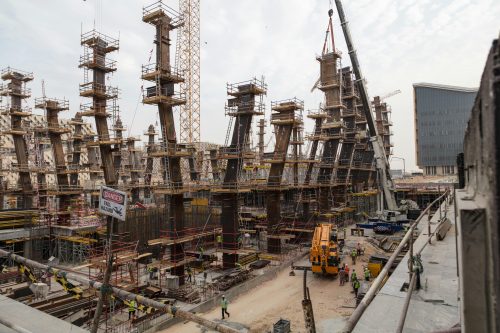
Cities routinely have construction and infrastructure projects taking place on roads, sidewalks, parks, public buildings, utility facilities, maintenance yards, and other municipal properties. These projects frequently involve expensive construction equipment, tools, materials, vehicles, generators, temporary structures, fencing, and other assets that can be vulnerable to theft, vandalism, or unauthorized access.
A construction site may be temporarily closed to the public, but that does not necessarily mean it is secure.
After municipal employees and contractors leave for the day, a project can become considerably more vulnerable. Equipment may remain onsite overnight, temporary fencing may create gaps or blind spots, and partially completed structures can create hazards for unauthorized individuals entering the property.
A professionally trained security officer can provide an active deterrent during these vulnerable periods.
Rather than simply remaining inside a vehicle or stationary post, security officers can conduct scheduled foot patrols, inspect perimeter fencing, monitor access points, observe equipment and materials, document unusual activity, and immediately report suspicious circumstances to the appropriate city representative or emergency services.
The presence of a uniformed officer also communicates an important message: the property is being actively monitored.
Preventing Theft and Vandalism
Municipal governments and public works contractors can lose significant amounts of money when equipment, materials, tools, or infrastructure are damaged or stolen.
Copper, wiring, fuel, tools, generators, construction materials, and specialized equipment can all become targets. Even seemingly minor acts of vandalism can result in costly repairs and project delays.
Security officers can help reduce these risks through a combination of visibility, patrols, observation, access control, and documentation.
A properly designed security post order might require officers to periodically inspect construction areas, verify that gates and access points remain secured, monitor vehicles entering and leaving the property, check for signs of tampering, and document conditions throughout the shift.
When officers discover suspicious activity, their role is not to independently act as police. Private security officers operate within the authority provided by law and their assigned duties. Their greatest value often comes from identifying problems early, documenting what occurred, protecting the immediate area when appropriate, and promptly contacting law enforcement or municipal personnel when a situation exceeds their authority.
San Francisco’s own outdoor event guidance recognizes the distinction between private security and law enforcement. Private security can be used for functions such as crowd control, parking-lot enforcement, ID checks, and enforcement of an event sponsor’s rules, while private guards do not possess police powers.
That distinction is important when cities develop security plans.
Security for Municipal Facilities
Public works departments do not only oversee construction projects. Cities operate numerous facilities that require protection, including maintenance yards, administrative buildings, community centers, recreation facilities, parks, storage areas, utility properties, and other government-owned locations.
Some facilities may need permanent security coverage, while others may only require temporary or intermittent services.
A contracted security company gives municipalities the ability to scale security according to the circumstances.
For example, a city may require security at a maintenance yard overnight for several weeks while a major infrastructure project is underway. Another department may require officers at a public facility during a period of renovation. A third department may need security only during weekends or during a specific special event.
This flexibility can be particularly useful when municipal departments need short-term or as-needed security coverage.
San Francisco has previously structured citywide contracting specifically for short-term and intermittent security guard services, including special events and locations without existing security coverage. The stated functions include maintaining a visible presence, monitoring facilities and grounds, protecting people and property against fire, theft, damage and trespass, and reporting unusual or suspicious activity.
That model illustrates how private security can complement municipal operations without requiring a city to permanently staff every location with its own security personnel.
Supporting Special Events
The Bay Area hosts thousands of public gatherings every year.
Some are relatively small community events. Others can attract thousands or tens of thousands of attendees.
Concerts, cultural festivals, parades, holiday celebrations, farmers markets, outdoor movie nights, sporting events, street fairs, community celebrations, waterfront events, and city-sponsored gatherings can all create unique security challenges.
Large crowds create conditions that do not normally exist in public spaces. Pedestrian traffic increases, vehicles compete for limited road access, temporary structures are installed, streets may be closed, vendors bring equipment onsite, and attendees may have limited familiarity with the surrounding area.
Security officers can help establish order within this temporary environment.
Their responsibilities may include monitoring entrances and exits, controlling access to restricted areas, protecting vendor and city property, directing attendees, monitoring crowds, observing potential hazards, conducting perimeter patrols, assisting with lost-person situations, documenting incidents, and communicating with event organizers and municipal personnel.
The goal is not simply to respond when something goes wrong.
Effective event security is primarily about identifying potential problems before they become emergencies.
Crowd Management and Public Safety
Crowd management is one of the most important functions security officers can provide during municipal events.
A large crowd can become difficult to manage when people are unfamiliar with event boundaries, restricted areas, entrances, exits, parking restrictions, or temporary street closures.
A visible security presence provides attendees with someone they can approach for assistance.
Security officers can help answer questions, direct individuals toward appropriate areas, discourage people from entering restricted locations, monitor congested areas, and notify event management when conditions begin to deteriorate.
This becomes particularly important when an event involves alcohol, large crowds, nighttime operations, temporary stages, electrical equipment, food vendors, road closures, or significant pedestrian traffic.
San Francisco’s event-planning guidance specifically emphasizes security planning, crowd control, alcohol management, venue layout, and coordination with law enforcement and other safety resources.
A coordinated security plan allows private security officers, city staff, event organizers, police, fire personnel, and emergency medical providers to understand their respective responsibilities before an event begins.
Protecting Temporary Infrastructure
Special events frequently transform public spaces.
Temporary fencing, stages, tents, barricades, generators, lighting systems, sound equipment, portable restrooms, vendor booths, signage, and other infrastructure may be installed throughout a city-owned area.
These temporary assets can represent significant financial investments.
Security officers can patrol these areas before, during, and after events to discourage unauthorized access and identify damage or hazards.
Post-event security can be especially important.
Once attendees leave, event infrastructure often remains onsite while vendors and contractors dismantle equipment. This transition period can create another window of vulnerability.
An overnight security officer can monitor the site until equipment is removed and the area is returned to normal public use.
Construction Zones and Public Works Safety
Security officers can also contribute to safety around public works projects where construction zones intersect with public areas.
A partially completed sidewalk, open excavation, demolition zone, road project, or utility installation can create serious hazards for individuals who enter without authorization.
Security personnel can monitor designated access points and discourage members of the public from entering restricted areas.
Their presence is particularly valuable after normal construction hours, when contractors may no longer be onsite.
The officer’s role is not to replace construction safety personnel, inspectors, or emergency responders. Instead, security provides an additional layer of observation and access control.
If an unauthorized person enters a restricted construction area, the officer can provide appropriate verbal direction, document the incident, and contact the appropriate authorities when necessary.
This proactive approach can potentially prevent a minor trespassing incident from becoming a serious injury or liability issue.
Security for City-Owned Parks and Public Spaces
Municipal parks and recreational areas present another opportunity for professional security services.
Parks can be expansive, difficult to monitor continuously, and heavily used during certain seasons or times of day.
Security officers can perform vehicle or foot patrols, inspect facilities, monitor restricted areas, identify property damage, report hazards, and provide a visible presence during high-use periods.
For special events held in parks, officers can be assigned to specific entrances, event perimeters, parking areas, backstage areas, vendor zones, or other sensitive locations.
Security can also help protect city employees working in the field.
Public works employees, inspectors, maintenance crews, utility workers, and contractors sometimes work in locations where they may encounter unauthorized individuals, disputes, trespassing, or other unpredictable situations. Having a professional security presence nearby can provide employees with an additional resource when circumstances become difficult.
A Visible Alternative to Constant Police Deployment
One of the strongest arguments for municipal security contracting is resource allocation.
Police departments have responsibilities that private security officers cannot perform. Officers respond to crimes in progress, emergencies, violent incidents, traffic collisions, investigations, and other situations requiring sworn law-enforcement authority.
Private security can handle many lower-level security functions that do not require police powers.
This creates an opportunity for municipalities to establish a layered public-safety model.
A security officer might monitor a construction site, patrol a public facility, control access to a restricted event area, or observe a parking area while police remain available to respond to calls requiring law-enforcement intervention.
The distinction is important.
Private security should not be marketed as a replacement for police. Instead, it should be presented as a complementary resource that helps cities use their public-safety personnel more efficiently.
Security Officers as the City’s Eyes and Ears
One of the most valuable functions of a security officer is observation and reporting.
An officer who is consistently assigned to a city facility or project can become familiar with the normal conditions of that location.
They learn what equipment belongs onsite, which gates should be locked, which vehicles are authorized, which areas should be restricted, and what normal activity looks like.
That familiarity makes unusual activity easier to recognize.
Detailed reporting also creates accountability.
Security officers can document patrol activity, incidents, suspicious behavior, property damage, access-control issues, hazards, and interactions with members of the public.
Modern security technology can make this process even more effective. Digital reporting platforms can allow supervisors and municipal contacts to receive reports electronically, while checkpoint systems can document that required patrol areas were actually inspected.
For municipalities, this creates a documented record of security activity rather than relying solely on verbal assurances that a location was monitored.
Professionalism Matters When Security Works for the Public
Security officers working on behalf of a city represent more than the security company that employs them.
They are interacting with residents, visitors, city employees, contractors, vendors, business owners, and members of the public.
Professionalism therefore becomes extremely important.
Officers assigned to municipal contracts should understand that they are operating in public-facing environments. They should communicate respectfully, remain calm during disagreements, avoid unnecessary escalation, and understand the limits of their authority.
Proper training in observation, documentation, communication, de-escalation, emergency procedures, customer service, and site-specific post orders can help officers perform these responsibilities effectively.
The appearance of the officer matters as well.
A clean uniform, professional demeanor, visible identification, and properly maintained equipment help establish credibility.
For public agencies, security should not simply be about putting someone in a uniform at a location. The objective should be to deploy trained professionals who understand the assignment and represent the municipality and security contractor appropriately.
Security Planning Before the Event
The most successful municipal security programs begin before the first officer arrives.
A security provider should work with the city department, event organizer, public works manager, or designated municipal representative to understand the location and anticipated risks.
A site assessment can identify access points, vulnerable areas, emergency exits, pedestrian routes, equipment locations, lighting conditions, parking areas, restricted zones, and potential crowd-control problems.
From there, the security company can develop post orders and determine the appropriate number of officers and patrol schedules.
For major events, security planning should also be coordinated with the applicable city departments and emergency services.
San Francisco’s current event-planning framework, for example, requires event organizers to address security planning and may involve police review of the security plan and requirements for private security, parking control officers, staff, volunteers, or police personnel depending on the event.
This demonstrates why security providers should be capable of working within a broader municipal command structure rather than operating independently.
Security During Large Bay Area Events
The need for professional event security becomes particularly apparent when cities host large gatherings.
San Francisco’s 2026 Outside Lands festival, for example, is expected to draw approximately 75,000 attendees per day, requiring extensive coordination involving transportation, street closures, police, medical personnel, public transit, and pedestrian movement.
While an event of that scale requires substantial law-enforcement and emergency-response resources, private security can still play important supporting roles.
Security personnel can be deployed throughout areas where the primary need is observation, access control, crowd guidance, property protection, perimeter monitoring, and enforcement of event-specific rules.
The same principles apply on a smaller scale to municipal events throughout Oakland, San Jose, Fremont, Hayward, Berkeley, Richmond, Daly City, Concord, Vallejo, Fairfield, and other Bay Area communities.
Every city has different facilities, demographics, infrastructure, event schedules, and security challenges. A professional security contractor should therefore design the service around the municipality rather than offering a one-size-fits-all approach.
A Flexible Resource for City Governments
Another advantage of contracted security is scalability.
A municipality may not need security at every facility every day. Instead, its needs may fluctuate according to construction schedules, events, seasonal activity, public gatherings, emergencies, or changes in facility use.
A security contractor can provide officers on an as-needed basis.
One project may require overnight security seven days a week. Another may require a roving patrol several times each night. A special event may require ten officers for one weekend. A city facility may need a single security officer during operating hours.
This flexibility allows municipal departments to develop security programs around actual operational requirements.
It also gives cities the opportunity to expand or reduce coverage as circumstances change.
Building a Long-Term Partnership With Municipalities
The best private security companies approach municipal contracts as long-term partnerships rather than simply staffing assignments.
A successful relationship requires communication between the security provider and city personnel.
Supervisors should regularly inspect assigned locations, communicate with municipal representatives, review incident reports, identify recurring problems, and recommend adjustments when necessary.
If a public works project begins experiencing repeated trespassing incidents, security coverage may need to change.
If an event consistently experiences congestion at one entrance, additional personnel may be appropriate.
If vandalism repeatedly occurs overnight, patrol schedules may need to be modified.
Security should be treated as an evolving process.
The objective is not simply to have an officer present. It is to continuously evaluate whether that officer is being deployed effectively.
The Future of Municipal Security in the Bay Area
As Bay Area cities continue investing in infrastructure, public spaces, transportation, community facilities, and large public events, the need for flexible security resources will remain important.
San Francisco itself maintains dedicated city security classifications for protecting public buildings and grounds against unauthorized entry, damage, and hazardous situations, demonstrating the continuing importance of security within municipal operations.
At the same time, city governments must balance public safety with budgets, staffing limitations, and competing municipal priorities.
Professional private security can help fill some of the gaps between routine municipal operations and situations that require police intervention.
When properly trained, supervised, licensed, and integrated into a city’s overall security plan, private security officers can protect public property, support public works projects, assist with special events, monitor municipal facilities, provide access control, document incidents, and serve as an additional set of eyes and ears for city personnel.
Public spaces belong to the community, and cities have a responsibility to keep those spaces functional, accessible, and reasonably secure.
Whether a city is repairing a roadway, renovating a public building, constructing new infrastructure, hosting a neighborhood festival, operating a municipal facility, or preparing for a large-scale public event, security should be considered an integral part of the planning process.
Private security officers cannot replace police officers, firefighters, emergency medical personnel, or other public-safety professionals. Their value lies in complementing those resources.
A well-trained security officer provides visibility, deterrence, observation, access control, documentation, and immediate communication when something goes wrong. When deployed strategically, these services can help protect city property, support contractors and municipal employees, improve event operations, and allow law enforcement to focus on situations that genuinely require police authority.
For cities throughout the San Francisco Bay Area, partnering with a professional security provider can therefore provide a practical and scalable way to strengthen public safety while protecting the infrastructure, facilities, employees, contractors, and community events that make Bay Area cities function.






No comment yet, add your voice below!